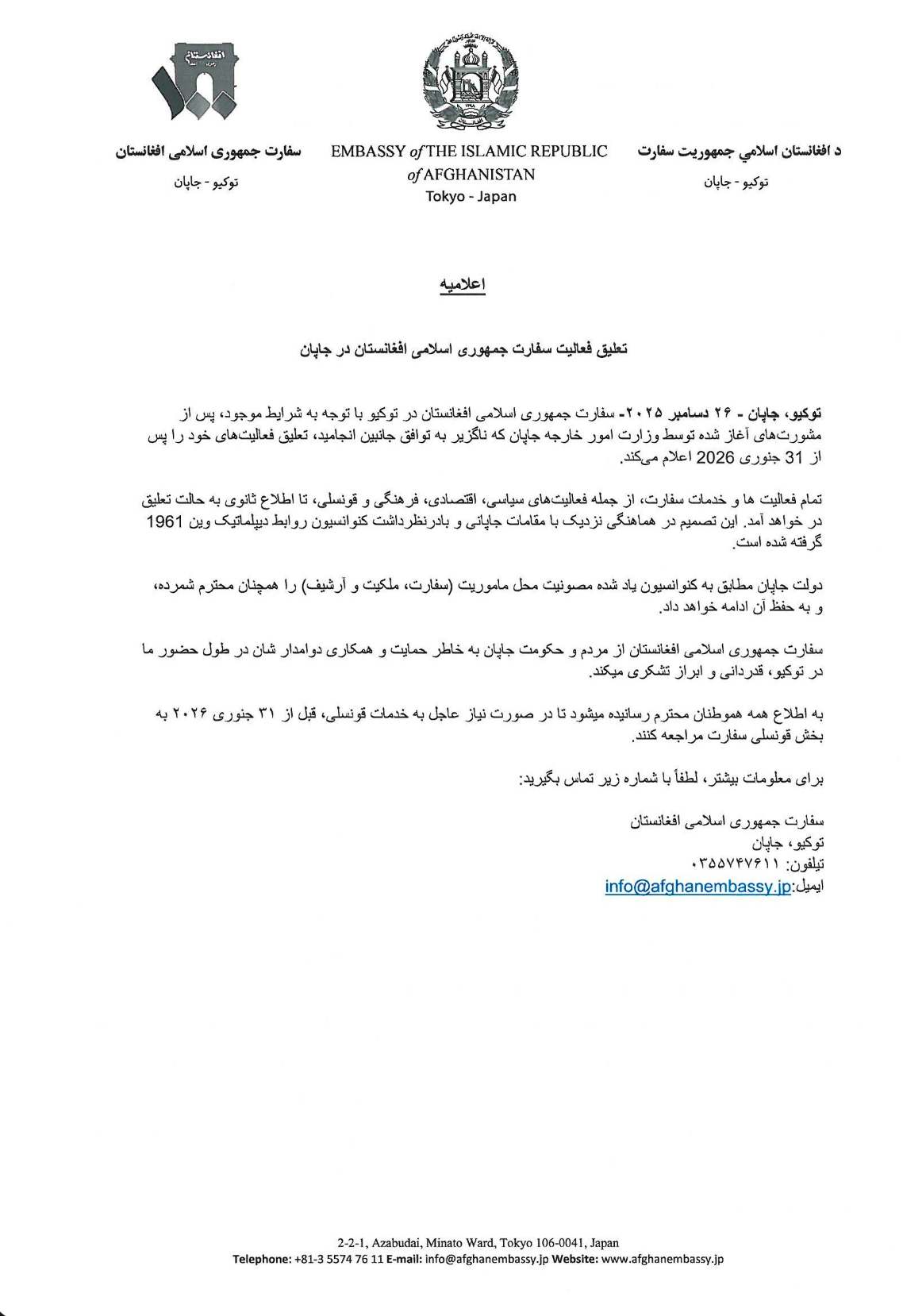
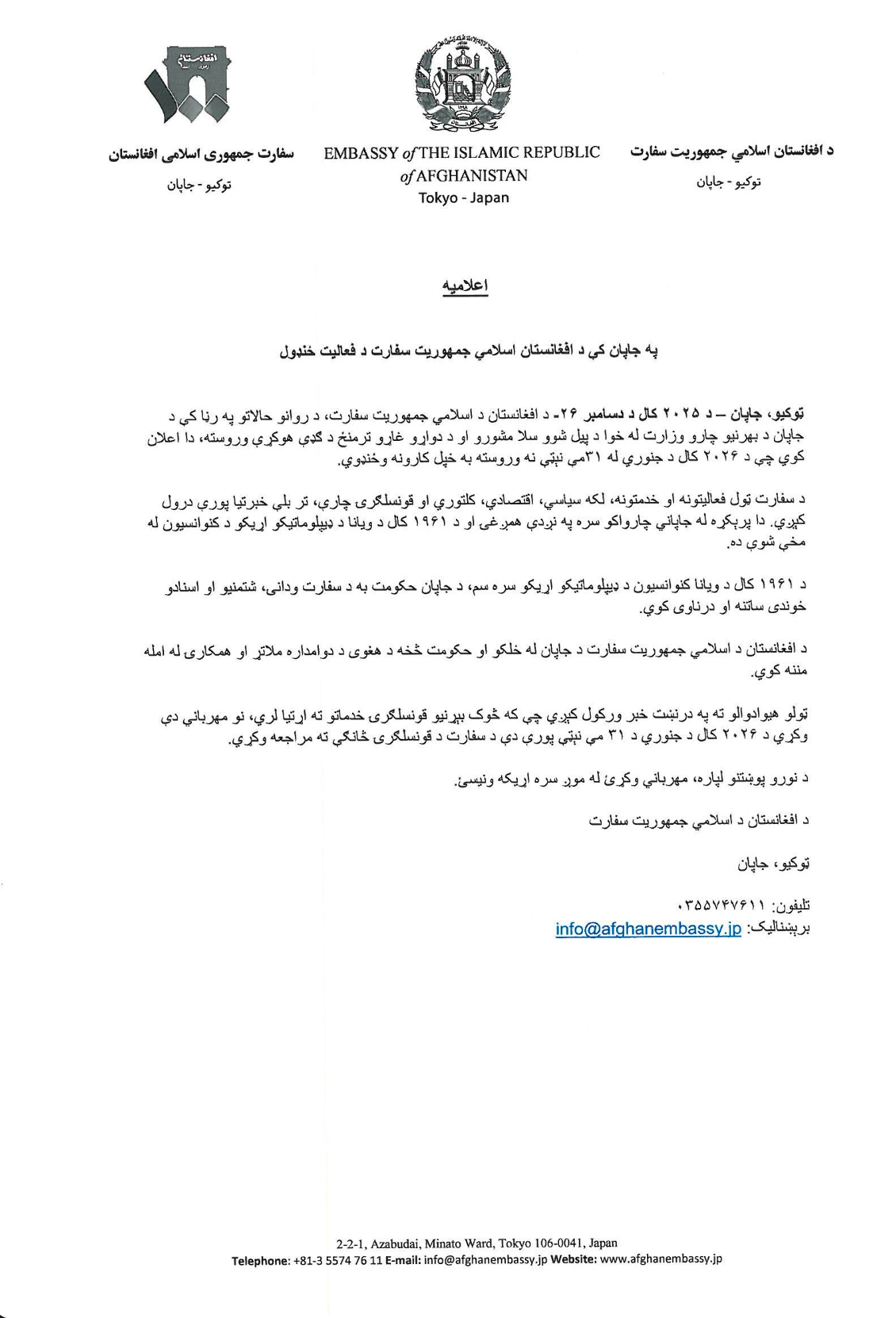
Japan’s involvement in Afghanistan began in the 1930s, with the establishment of formal diplomatic relations between the two countries in 1931. Afghanistan opened its embassy in Tokyo in 1933, while Japan established its embassy in Kabul in 1971. These ties, however, were disrupted following the Soviet invasion of Afghanistan in 1979, after which the Japanese embassy in Kabul was closed. For over two decades of conflict and instability, Japan maintained limited engagement, focusing primarily on humanitarian aid delivered through international organizations.
Following the fall of the Taliban regime in late 2001, Japan quickly re-established its diplomatic mission in Afghanistan. The Japanese embassy in Kabul reopened in 2002, symbolizing Japan’s commitment to Afghanistan’s reconstruction and stability. High-level visits soon followed; Afghanistan’s leaders engaged with Japanese officials in Tokyo, while Japan dispatched senior diplomats and representatives to Kabul to strengthen political, developmental, and cultural ties.
As one of Afghanistan’s largest donors, Japan has played a central role in post-2001 recovery and development. Japan hosted the Tokyo Conference on Reconstruction Assistance to Afghanistan in 2002, which mobilized global commitments toward rebuilding the country. A decade later, in 2012, Japan again hosted the Tokyo Conference on Afghanistan, where it pledged long-term assistance and helped set the framework for Afghanistan’s sustainable development through the “Tokyo Mutual Accountability Framework.”
Japan’s contributions have extended beyond diplomacy into practical assistance. Through its Official Development Assistance (ODA), Japan has committed billions of dollars to Afghanistan, focusing on infrastructure, healthcare, education, governance, and rural development. Notably, Japan has been at the forefront of supporting human security initiatives, including projects aimed at empowering women, improving maternal and child health, and strengthening Afghan institutions. Japan also supported demining operations, agricultural revitalization, and police training, contributing to both security and livelihoods.
On the cultural and people-to-people level, exchanges between Afghanistan and Japan have grown through scholarships, training programs, and academic partnerships. Many Afghans have studied in Japan under various programs, bringing knowledge and skills back to their homeland. Japan’s “soft power” approach—emphasizing peacebuilding, self-reliance, and community-based development—has earned it deep respect among the Afghan people.
Today, Afghanistan values Japan not only as a donor and partner but as a nation that has consistently advocated for peace and stability in the region. Japan’s engagement reflects its belief in supporting Afghanistan as a sovereign, democratic state capable of serving its citizens. Even amid recent changes in Afghanistan’s political landscape, Japan has continued to express its commitment to humanitarian aid, human rights, and inclusive development.
The partnership between Afghanistan and Japan stands as one rooted in friendship, mutual respect, and shared commitment to peace. Afghanistan deeply appreciates Japan’s long-standing sacrifices and contributions—both financial and moral—that have supported the country in overcoming decades of conflict. This relationship continues to represent hope for Afghanistan’s brighter, more stable, and self-reliant future.